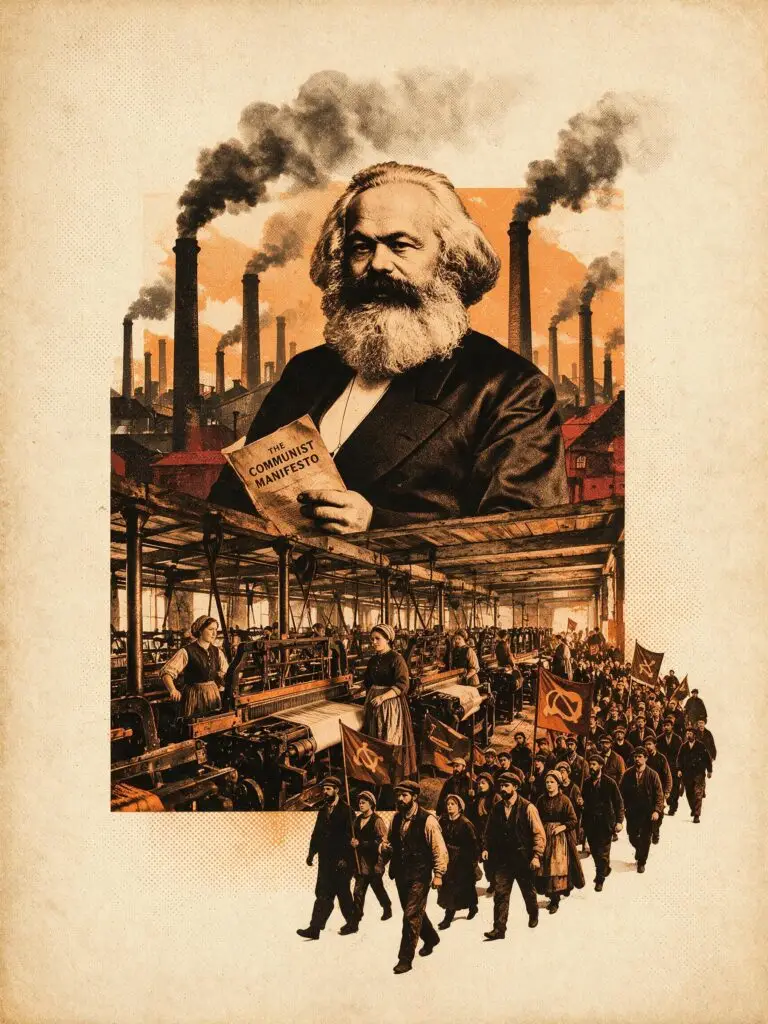
Chapter 3

This chapter is divided into shorter sections covering the people, events and ideas that shaped early liberalism.

Read them in order to follow the complete argument, or choose a subject below and explore it at your own pace.

THE GLORIOUS REVOLUTION

EXPLORE

Chapter 1 returns to the Glorious Revolution, the Bill of Rights and John Locke’s Social Contract. It explores how ideas such as life, liberty, property, representative democracy and the rule of law challenged absolute monarchy and hereditary privilege.

It also introduces the ideal of the “self-made man” and asks who truly benefited as markets, private property and individual wealth became increasingly powerful.

The Glorious Revolution

Section 1

Section Title

Section brief outline

The Rise of Organised Labour

Section 2

Section Title

Section brief outline

Then Came Communism

Section 3

Section Title

Section brief outline

The Austrian School

Section 4

Section Title

Section brief outline

THE BIG IDEAS BEHIND THE STORY

Four straightforward explainers introduce the concepts that appear throughout the chapters and help make the wider story easier to understand.

Neoliberalism Files explores more than political history. It looks at the ideas that influence who owns resources, who makes decisions and who pays when the system causes harm.

The project introduces four important concepts: externalities, the commons, requisite variety and viable systems. Together, they help explain why markets do not always work as promised and how different forms of organisation could offer another way forward.


FOUR IDEAS THAT HELP EXPLAIN THE SYSTEM

Externalities
Costs created by businesses but paid for by everyone else.

The Commons
Resources that should belong to us all.

Requisite Variety
Complex systems require equally capable ways of controlling them.

Viable Systems
A bottom-up approach to organisation and decision-making.

A single tilted vintage investigation dossier